













For most companies in the B2B environment, one of the main annual objectives is to attract new customers in order to, with this, increase sales. If this is not a problem for your company… congratulations! But bear in mind that it is always advisable to attract or permanently study prospects in order to quickly redirect the loss of an important customer or an unexpected drop in sales.
What do we mean when we talk about prospects?
In business jargon, we understand by prospect those potential customers for our company. In short, they are those possible consumers of our products or services with financial potential to buy.
To do this, the sales team is responsible for studying the market through different methods. Logically, first of all they have to contact those “leads” that are received organically, whether by telephone, email or social media. And whether we are proactive or reactive, we always have to treat them in the best possible way so that – whenever it is of interest – we can convert them into real customers and establish a lasting relationship. If we see that it is not a customer that can fit with our business strategy, we can kindly refer them to another player in the same business fabric, avoiding a waste of time for both parties.
Let's point out five keys to be able to attract these prospects as effectively as possible:
1 • Work in coordination with a Database
So that your sales team can transform new and interesting “leads” into customers, the first thing they have to do is work in a coordinated way with a shared database. There are many ways to create this database, from a shared Excel or a Google Drive document, to a powerful CRM. Logically, effectiveness will be gained by working on it through a platform that integrates customers and visits, and that allows them to be constantly analysed with different parameters. Either way, the most relevant information must always be noted down.

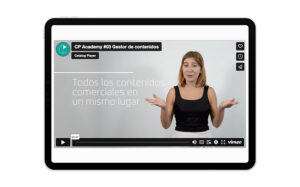
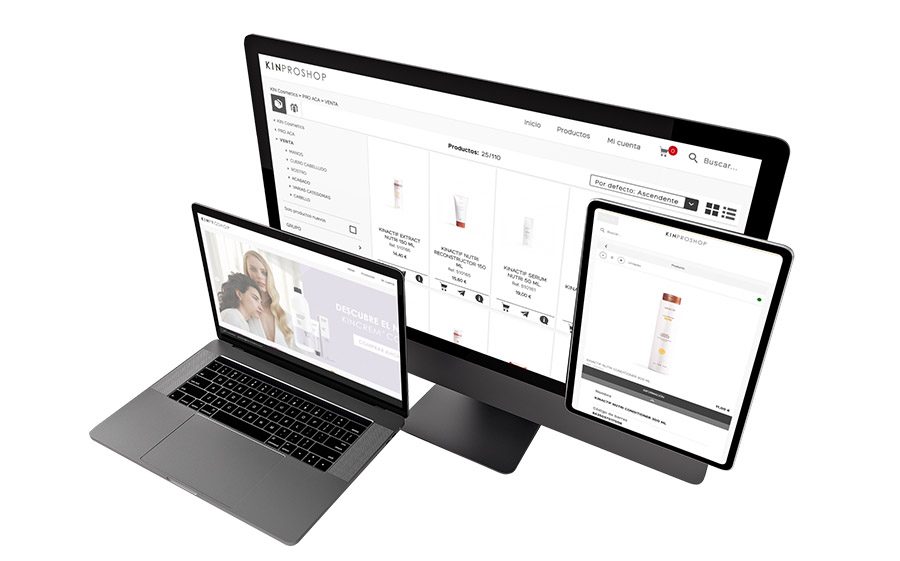
With Catalog Player's smart sales software, your sales team will be able to access all this information quickly. In addition, they will have the help of the Artificial Intelligence to be able to decide which potential customers may be more interesting to approach at each moment.
2 • Analyse (research) prospects
To avoid wasting time (and your company's money) trying to attract customers who turn out to be of little interest, it is essential to analyse them beforehand. There are a multitude of channels and places to research potential customers, among which virtual environments such as LinkedIn currently stand out, where we can even establish contact or even a conversation with our possible interlocutor. Above all, let's avoid being invasive. We could quickly be detected as SPAM!
Depending on the type of company, the different channels or social media profiles (Twitter or Facebook) can also give us a lot of information, as can searches on Yelp or Crunchbase… and even on Google (you can use an advanced search). We have to check that the potential customer is attractive to us and, in any case, show them that we know them.
One aspect that we must not forget either is the possibility of consulting their public financial statements. It will give us interesting clues about their reliability and trustworthiness.
3 • Define the sales pitch and argument
We all know that our sales team has to have the best tools, but sometimes we forget that they also have to be clear about the sales argument. A pitch aligned with business objectives, and above all one that does not “clash” with the company's philosophy. To do this, we can have all the documents centralised on a smart content and sales management platform. Thanks to a platform like Catalog Player, your salespeople will be able to access the latest versions of all corporate documents, generate interactive presentations and personalised portfolios. And all of this can be presented in person or virtually, in both cases sending sales capsules by email with our commercial proposal.

4 • The first impression is key
It is clear that it is impossible to generate love (business love) at first sight with any prospect… although it would be great! To get closer to that goal, we have to approach in the best way and take different variables into account so as not to get off on the wrong foot. The first impression is key, and if it is not satisfactory it is very difficult to put right. To do this, it is advisable to establish a brief first contact, through which we can see whether we can secure a more relaxed appointment, if possible in the customer's business environment.
If the first contact is by telephone, it is very important to:
- avoid long calls that may overwhelm the potential
- control the times of the calls so as not to disturb
- speaking well is as important as listening
5 • Regularly analyse contacts
However well prospecting is done, obviously not all contacts will become customers of our company. What is very important at this point is knowing what conversion we have at the different stages of the contact process. We have to analyse quantitatively and qualitatively, knowing what reasons have led them not to decide on our product or service:
Are they going with a competitor's product? Have we not captured their attention? Have they not even bothered to open our communications? Have we not solved their needs? Have we not captured their interest during the visit?
All this analysis will be essential to be able to improve our sales process and improve future prospect acquisition.