

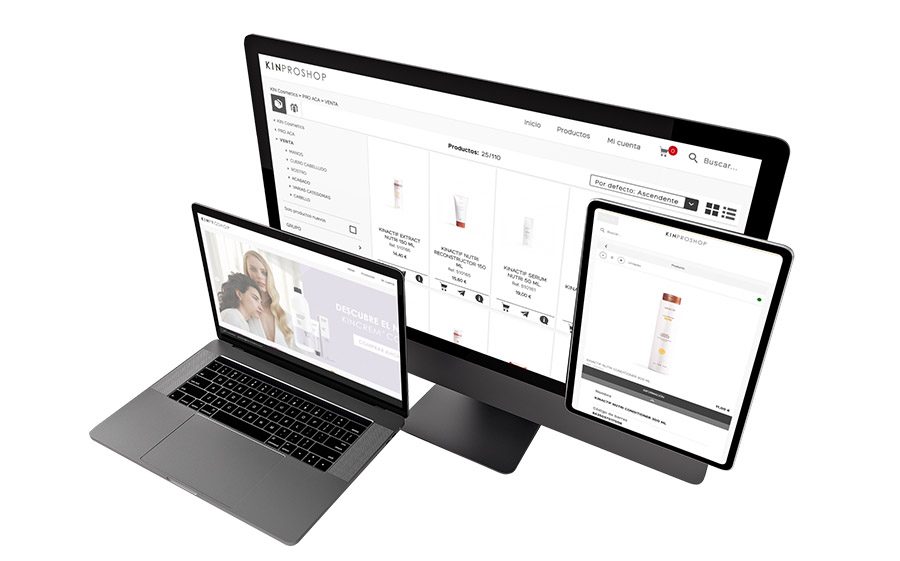













Content, increasingly elaborate and original, has become a major protagonist in B2B sales processes. Digital tools make it possible to show the customer exactly what they are buying, for example, with interactive catalogues or highly accurate simulations.
And although it is always advisable to have a great variety of content ready, both commercial and marketing, and to distribute it through different channels, for many companies increasing and perfecting content means making a large investment all at once.
Nowadays we cannot overlook the importance of having quality content for sales processes. Therefore, we must commit to improving content which, in turn, is accompanied by a reduction in costs. And yes, it is possible.

Why does the cost of content rise?
Firstly, if we intend to reduce content costs, it is essential to ask ourselves: where exactly does the investment required by content come from?
First of all, we must bear in mind that when we talk about commercial content it is not just about producing it, it requires an investment in: creation, maintenance and distribution.
Starting from this, there are specific factors and situations that can raise the base cost of these processes:
Printing costs
If in our company we depend mainly on paper for the distribution of our content, we expose ourselves to potential problems that directly affect the cost of content.
On the one hand, printing large quantities of content involves a considerable cost. But, beyond that, the problem arises from the cost of modifying content on paper. If, for example, a catalogue requires us to add a new product or change some information, this means having to reprint all copies of the document once again. In other words, the cost easily doubles.
Underused content
On the other hand, we can also find that the cost rises if the content we produce is underused. It often happens that content generated by marketing is not used by the sales team. Whether because:
- The content produced does not adapt to the needs of salespeople
- It becomes outdated because it is not updated in time
- There are difficulties in its distribution among teams and with the customer
Devoting time and resources to something from which no return is being obtained also translates into higher costs.
Lack of communication between departments
This lack of use is given in most cases by a lack of communication between Marketing and Sales. Studies show that only 20% of content generated by marketing is used by the sales team.
It is possible that your marketing department does contribute to generating content for sales, but this is not enough. If salespeople consider that it does not adapt to their needs, they will not use it.
In other words, the lack of communication between departments increases the cost of content without this meaning a substantial improvement in it.
That said, how can we reverse this situation and reduce content costs?

Solution: optimise content with a Smart Selling platform
The solution can be very quick and simple. It is worth committing to an intelligent sales platform suitable one, which allows the use of multimedia content and ensures fluid and constant communication between Marketing and Sales.
In this sense, the best bet is an omnichannel platform. That is, we must try to make information accessible at all times for teams and not in isolation, but in an integrated way between the different channels. In this way we will quickly see an exponential improvement in content:
- Communication between marketing and sales is fluid and marketing generates more suitable content for selling
- Multimedia formats make it easier for content to stay up to date at no extra cost
- Content is accessible to sales staff at all times
- Distribution is much faster both between departments and with the client
In this way, we see how a Smart Selling platform helps us avoid costs from waste and reworking. Furthermore, content optimisation leads to an exponential improvement in customer experience, which translates into closing more sales and increasing profits.