









Nowadays you can find on the market a large number of digital solutions that can be the best option to solve certain problems in your company and increase profits.
Especially in B2B companies, where the management of large amounts of data - about products, customers, results and more - is essential, business software can make a big difference. With the right digital tools you can gain control over the company's activities. The better the planning, the greater the economic efficiency can be.
Of course, depending on what your company's needs are, you should opt for one software or another. That is why today we briefly present 10 types of business software.

10 types of business software
1. Office software
This type of software offers certain resources for office work that make it easier. It facilitates the creation and organisation of texts, spreadsheets, presentations, etc.
It is a very popular type of software, which, especially nowadays, is of greater interest if it also facilitates the sharing of these documents and their accessibility, whether through this same software with its integration into another.
2. Project manager
This type of software is used to assign responsibilities to certain tasks and to optimally monitor the progress of projects.
A great advantage of this type of software is that it allows you to record the amount of time invested by each employee in each project. In this way, many business processes can be streamlined and
3. Accounting system
These systems help the Administration and Finance department to carry out their functions more agilely. It allows the financial state of the company to be assessed in real time, so there is more detailed knowledge of the company's day-to-day reality.
Thus, movements of interest can be verified and carried out more sensibly and errors reduced.
4. Software for remote working
As a result of the pandemic, software focused on facilitating employees' remote working has emerged.
Mainly, this software allows office tasks to continue outside the office, with work boards, virtual meeting rooms and generally facilitating interaction both with clients and with colleagues digitally.

5. Time tracking software
Time tracking software is a very useful tool for managing a company's human resources. It allows a record to be kept of employees' clocking in and out at their workplace. In this way, it is possible to effectively control what the company's most productive hours are, and manage schedules easily for possible changes or to plan meetings.
In the end, the main advantage of this system is achieving greater control over each person's work performance and hours worked.
6. WMS (Warehouse Management Software)
This is software used in companies that manage large quantities of physical products. This system is mainly used to control stock in and out and the location of products.
This type of solution is especially interesting to integrate into commercial software with more ease. In this way, the sales team can have real-time control of the warehouse, while interacting with the customer and carrying out commercial actions on the move.
7. ERP (Enterprise Resource Management)
The name ERP comes from the English acronym «Enterprise Resource Planning». That is, it is a system for planning business resources.
This type of software integrates information about the company's resources to improve their management and optimise business processes. Through the automation of certain manual tasks, such as preparing invoices, the system makes it possible to speed up processes and reduce errors.
At the same time, an ERP can make information easily accessible to the different departments involved in these processes, so the time devoted to each task is optimised. Better data management allows business decision-making to be faster and more effective, based on real and objective data.
A 42% of Spanish SMEs use an ERP
8. CRM (Customer Relationship Management)
As its English name indicates, «Customer Relationship Management», a CRM is a system that offers what is needed to improve relationships with the customer.
CRM systems allow customer information to be catalogued and managed. This often includes tools for scheduling visits or assigning certain services to specific customers. The collection of useful information about customers is a very useful tool, which allows salespeople to carry out their work more effectively, with more background knowledge about customers.
33% of Spanish SMEs use a CRM
9. Business Intelligence
This is software that helps with company management through data analysis. This type of software gathers information and turns it into useful data for business decision-making. Thus, it facilitates the detection of strengths and weaknesses in order to build a more solid strategy.
BI software has greater benefits if it is integrated with other software, such as the aforementioned ERP or CRM. Cross-referenced data makes it possible to extract valuable statistics, which is very useful for the decision-making process.
10. Sales software
Commercial software or sales software consists of a system that allows a company's commercial processes to be optimised. For this improvement in sales, it is key that this software achieves a certain automation, to free salespeople from routine tasks of little added value.
At the same time, if we take into account that an essential part of the sales team's work is going out to sell outside the office, it is important that this system allows the sales force to carry out their functions on the move, with complete effectiveness and without losing information in the process.
Acquiring sales software is a key decision for the company, as it directly affects the increase in profits. To do this, it is important that there is an integrated management of the entire sales process, in which the marketing department and management can also actively participate.
Traditionally, there has been a great lack of knowledge about much important sales information. For example, knowledge about what happens during the sales visit has depended on the report made by the salesperson from their subjective position.
Sales software must solve this through constant and objective data collection, which then becomes useful statistics to improve the sales strategy.
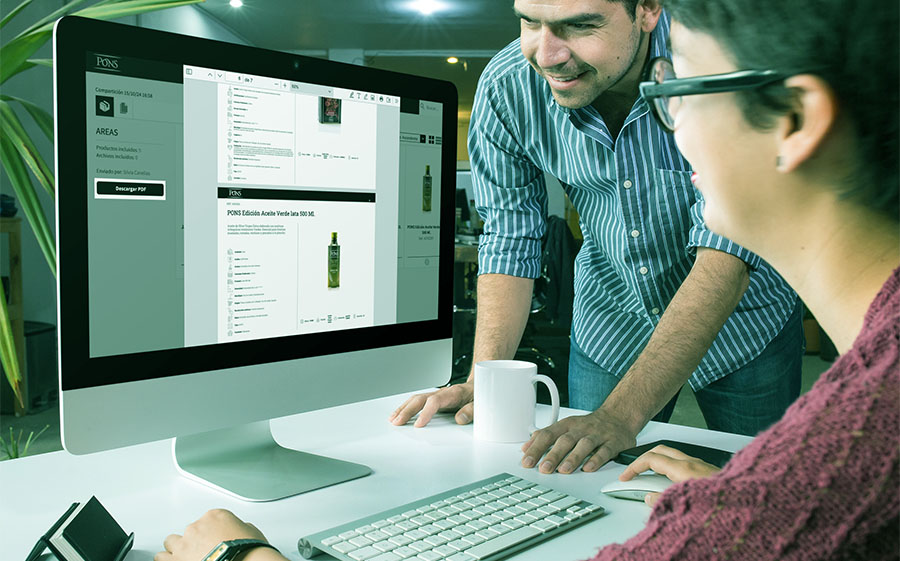
In this sense, choose commercial software that allows you to manage all sales-related information from one place: the customer portfolio, the catalogue, the activity during the sales visit… and more. Bear in mind that the best way to increase profits through digitalisation is for there to be an overall improvement of the sales team.
The CatalogPlayer solution
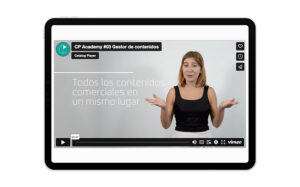
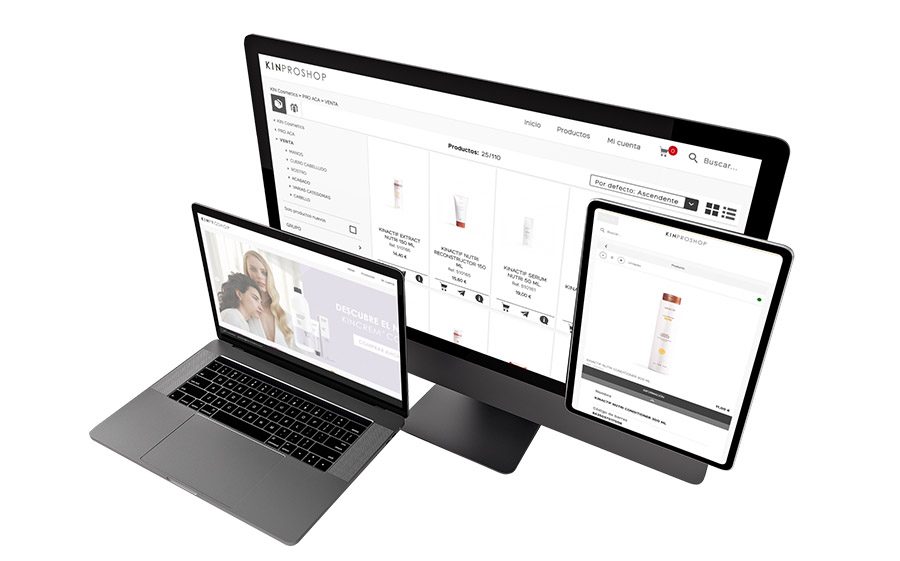
To achieve this comprehensive sales improvement, you must opt for an “All in One” product. The CatalogPlayer platform put on your sales reps' tablets everything they need to go out and sell.
This innovative Sales Enablement platform facilitates fluid communication between salespeople and their customers to achieve better commercial results. At the same time, it improves communication between the marketing and sales teams and provides management with metrics about the entire sales process.
It is the solution you need to adapt to the current market, in which it is increasingly important to build solid and lasting customer relationships beyond sales.