












In this Sales Enablement blog we like to review the main sales trends that emerge every time we hang a new calendar on the wall.
First of all, let's propose a shared challenge to see if the 2024 trends affected you and to what extent:
- Data analysis: data-driven personalisation
- «Phygital» experiences: the union of the physical and the digital
- Omnichannel: everything at once and in one place
- Automation: efficiency on the rise
- Customer Centricity: the importance of providing value
And what is 2025 expected to have in store for us? It is clear that you all have an inkling of which concept we are going to start our Top-5 B2B sales trends proposal with: of course, the omnipresent Artificial Intelligence.
Top-5 sales trends for 2025
1. Artificial Intelligence and Automation in Sales
We can call it IA or AI, but there is no doubt that Artificial Intelligence (AI) and automation are redefining the way companies sell and interact with their customers. In 2025, B2B sales will be deeply influenced by the use of smart chatbots, virtual assistants, predictive analytics y process automation.
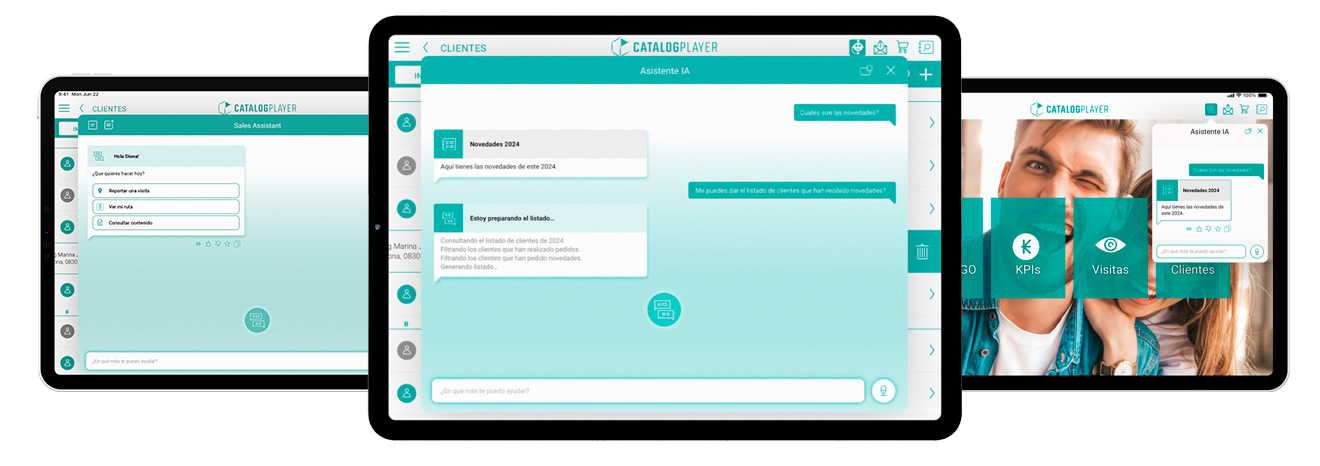
Platforms such as Catalog Player that integrate AI allow companies to anticipate needs, personalise interactions and optimise decision-making in real time.
The automation of the sales process will allow companies to manage faster and more efficient workflows, from customer acquisition to after-sales follow-up. In addition, the use of AI for customer segmentation and the personalisation of offers will improve conversion rates and generate a more customer-centric experience.
2. Personalisation and customer experience (CX)
The customer experience or customer experience (CX) will be a key differentiator in B2B sales in 2025. Business customers are not just looking for products or services; they want solutions that adapt to their specific needs. A personalisation that is not limited only to the sale of the product, but also to the purchasing experience: from customer service to after-sales, organisations will seek to offer a smooth and satisfactory journey for their customers.
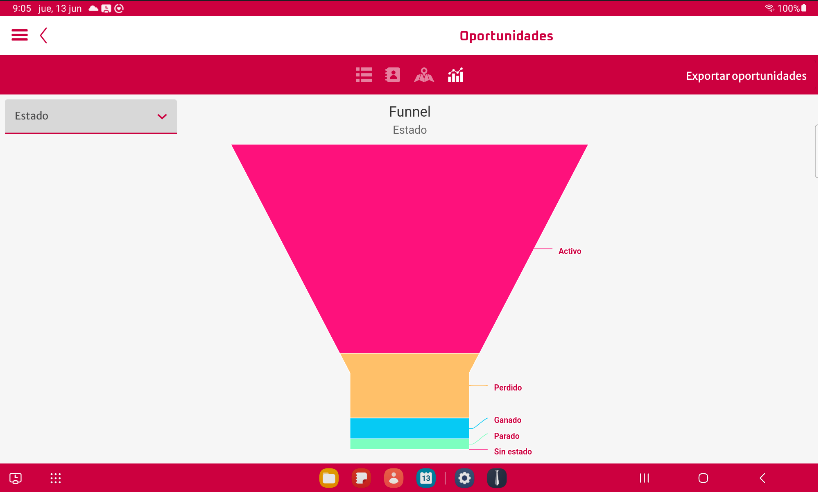
Companies are using more advanced customer relationship management (CRM) platforms, which not only store data, but also analyse purchasing behaviour, preferences and past interactions to offer personalised offers. This can range from more targeted marketing to dynamic negotiations on prices or products tailored to the customer's needs.
3. Digital Transformation and the cloud
The digital transformation will continue to be a predominant trend in 2025. Companies will continue to adopt solutions based on the cloud to improve efficiency, collaboration and scalability. This change is driven by the need to access information more quickly, flexibly and securely.
The use of cloud platforms will allow companies to optimise their inventory management, payment systems, project management y internal operations. In addition, cloud technologies will also facilitate the adoption of solutions for big data, AI y blockchain, offering advanced analytical capabilities and more transparent processes.

The digitalisation of sales will allow companies to offer a smoother and more efficient experience, from lead capture to delivery of the final product, and marketing automation will be key to capturing and nurturing leads more effectively.
4. Sustainability as a key factor in purchasing decisions
The sustainability has become a priority for companies around the world, and this shift is influencing B2B purchasing decisions. Business customers, especially those in sectors such as manufacturing, construction and technology, are increasingly interested in working with suppliers that can demonstrate a real commitment to sustainability.

In 2025, it is expected that B2B companies that offer products and services with a low environmental impact, that use recycled materials or that align with practices of the circular economy, will be better positioned to attract customers who prioritise corporate social responsibility (CSR).
5. Digital Marketing and Omnichannel Sales
The digital marketing strategies will continue to evolve to integrate an omnichannel experience. In 2025, B2B companies will seek to integrate all their customer touchpoints, whether through online channels, e-commerce, social selling o face-to-face interactions. Omnichannel selling will allow companies to offer a consistent and seamless experience to customers, regardless of how they choose to interact.
The use of advanced CRM y automation tools platforms to manage these multiple channels will be crucial to maximise sales opportunities and maintain a constant relationship with customers.

B2B sales in 2025 will be marked by a digital transformation, the customer focus, the sustainability and the use of advanced technologies such as artificial intelligence and automation. Companies that can adapt quickly to these trends and offer more personalised, secure and efficient solutions will be better positioned to lead in the competitive B2B market of the future.
With greater integration of technology, sustainability as a key differentiator and greater interaction through digital channels, companies that master these trends will be ready to capture the attention of increasingly demanding customers.