








Nowadays we hear a lot about the urgency for companies to be present on all channels.
In a recent survey by McKinsey users were asked to choose between traditional (or human) interactions, remote interactions and the self-serve option to buy autonomously. The result not only showed that preference was balanced, but also that most users expressed that they did not want to give up any of these options.
Statistics prove it: consumers do not opt for a specific channel, they prefer hybrid sales.
However, had you considered that multichannel and omnichannel are not the same thing?
Multichannel
Multichannel consists of a company's ability to be present on different channels through which the customer can buy or simply get in touch with the brand.
For example, a company may sell through its own website, on Amazon, in a physical store… and contact customers through its stores, social media, email, phone calls, etc. This would be an example of multichannel.
In the case of multichannel, the company has a range of channels, but these are not connected to each other.

We could say that, in many cases, multichannel is not a specific strategy, but rather a reality resulting from the needs of the current context. Users who come into contact with the brand are multichannel, so the company adapts to consumers in this sense. What we could call a reactive, rather than proactive, strategy.
Cross-channel strategies
We could add here cross-channel. strategies. In this case, multichannel goes a little further. Here, different aspects of the same purchase process take place on different channels. For example, a cross-channel strategy allows the customer to discover a product on social media, reserve it online and then pick it up in a physical store.
That is, with a cross-channel strategy there is a certain continuity between the different channels. However, this does not mean that they are truly connected to each other. The customer consciously moves from one channel to another throughout their Customer Journey, but there is no integration of the channels, so it is impossible for the company to track the whole process.
Furthermore, the customer does not have a global purchasing experience, which greatly increases the chances that they will abandon the purchase at some stage of the Customer Journey.
Omnichannel
When we talk about omnichannel, we refer to when the different channels are interconnected with each other and form part of the customer's overall purchasing experience.
That is, there is an integration of the channels that allows the customer to feel secure throughout the Customer Journey, rather than moving from one channel to another without knowing exactly where they are.

Omnichannel is the only strategy that ensures a seamless experience, that is, a totally fluid, “seamless” customer experience. This helps keep the customer at the centre of the strategy at all times, which we call Customer Centricity, an approach that is key in today's sales.
At the same time, this integration of channels is the only one that ensures the company can track the purchase process at all times.
How to implement omnichannel?
New digital technologies are the key to implementing an omnichannel strategy. There are tools that facilitate the integration of all the company's points of contact with consumers.
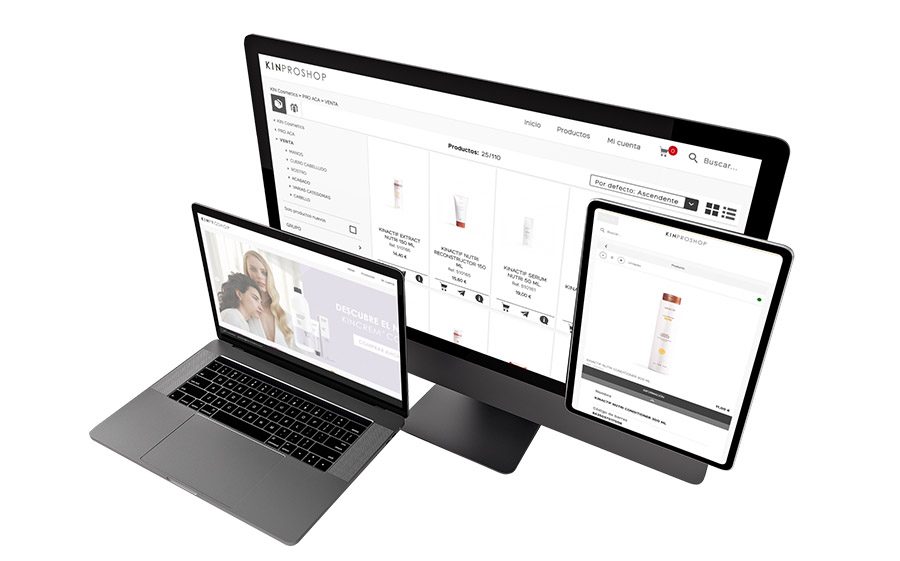
In the case of B2B sales, a digital Sales Enablement platform is the best way to implement an omnichannel strategy. A platform that allows you to stay connected with the customer throughout the entire Customer Journey in a global way: from when they first discover the brand, until they buy and become loyal.
Precisely, omnichannel is key to customer loyalty and to ensuring that we continue to boost engagement after the purchase.