










The first experience is key
A customer's first experience with your company is not only relevant, it is arguably the most important. And also the most delicate.
The first contact is the best opportunity to apply loyalty strategies and to attract a customer. However, if the contact is negative or the customer feels that the treatment has been incomplete, at this moment it is easier for them to go to the competition, in search of a more customer-focused experience.
Now more than ever, customers expect a memorable experience from the very first moment. And it is not just that preferences have changed; with the overwhelming number of purchasing options we are exposed to daily, differentiating yourself with a good first impression is key to ensuring success.
According to a recent survey by Microsoft 54 % of global customers say they have higher expectations for customer service today than a year ago.
But this is not necessarily negative.
According to an article by Customer Focus, 55% of consumers are willing to pay more for a guaranteed good experience.
Elaborate a detailed Customer Journey
Firstly, to increase engagement in commercial interactions you must be very clear about the Customer Journey you wish to offer. This journey begins at the first contact and continues until the purchase, and even after it.
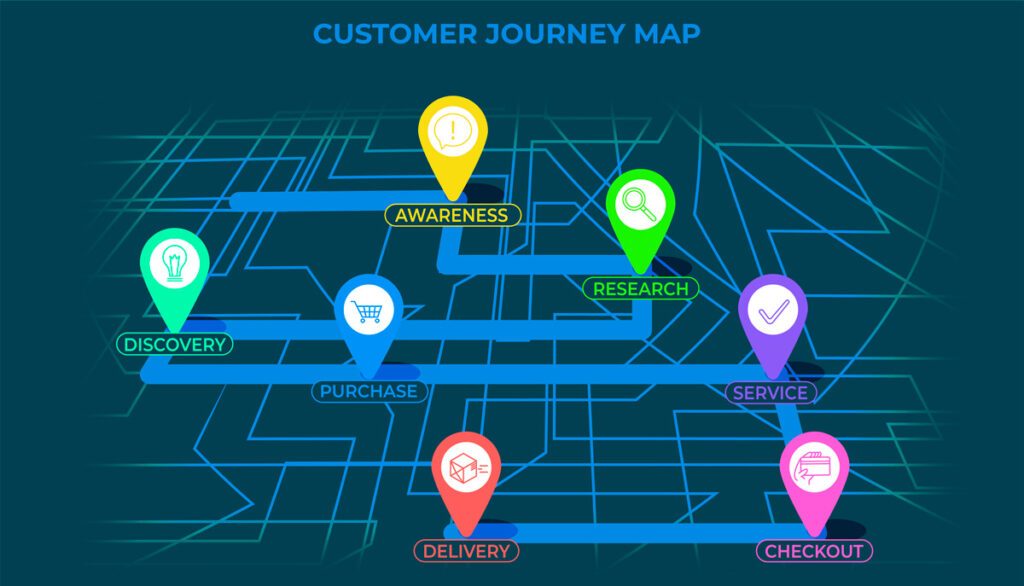
To do this, sales experts recommend designing a map of the Customer Journey, specifying the details of the process and the parties involved at each moment. The more detailed the Customer Journey, the greater your team's ability to detect opportunities and act appropriately at key moments for loyalty.
Even in purchases that do not close, this will allow us to have metrics on the customer's «lifetime», a key metric to detect weak points in our sales process and improve loyalty strategies.
Encourage the retention of existing customers
Often, companies focus a large amount of resources on attracting leads. This, of course, is essential and the best way to grow. But did you know that acquiring a new customer is 6 to 7 times more expensive than keeping an existing one? Therefore, while we look for new ways to attract customers, it is also essential to implement strategies to retain those who already know us and have bought your products or services, as they are very likely to be willing to do so again.
Some strategies for customer retention are:
- Use data analysis tools to obtain personalised reports and thus offer each existing customer what might interest them most.
- Make the most of social channels -such as social networks- to create a community and for customers to see that they have direct contact with the brand.
- Enhance the personal touch in dealing with customers. To do this, the human factor is key, encourage your sales team to interact with the customer in person or online, but going beyond automated sends.
- Gather feedback from customers to better understand their tastes and for each salesperson to adapt to them.
Customer segmentation
As we mentioned in the previous point, it is clear that without knowing our customers well it will be difficult to foster engagement. That is where segmentation tools are your best ally.
It is difficult to understand the needs of your users if you do not know who they are, what characteristics they have -whether demographic, psychological and even emotional- and, above all, what they expect to get from your product or service.
Although your customers have in common that they consume your products or services, this does not mean that they are all the same, neither personally nor in their reasons for trusting your company.
In this sense, in marketing a distinction is often made between: repeat customer, loyal customer and occasional customer. This is a first segmentation that is key. While loyal customers expect, and should receive treatment in line with their expectations with the company and benefits for their loyalty, with repeat customers and especially occasional ones we should invite them to make a new purchase.
But to ensure that our customer loyalty increases and we differentiate ourselves from the competition, it is worth going one step further. Digital tools make available to us the ability to collect large amounts of data a thousand times faster and more effectively than before. In this way, we can segment the strategies and content we send to each customer by segmenting by audiences, according to their psychological characteristics, desires and more.

Alignment between Marketing and Sales
Regarding the acquisition and loyalty of customers in a segmented way, it is clear that the work of Marketing will be essential, especially in the design of specific strategies and content to ensure more purchases by occasional customers. In this, the participation of sales team is also essential, as it has privileged information on the purchasing patterns of each customer and a great capacity to offer a more personal customer experience.
In this sense, the alignment between the two departments is key, as it is what will allow us to present the right content to customers, since Marketing has the information and the skills to create quality content segmented by audiences, and Sales has the knowledge and field experience to know whether this content really works to close more sales.
Furthermore, it is important that the content Marketing creates is actually used by Sales, so it must be adapted to their needs when they are in front of the customer. Otherwise, it will be a waste of resources and time that is detrimental to your company.
Sales software to streamline loyalty
To improve your retention strategies, it is essential to have software specialised in customer management, especially if your company is growing. Carrying out all follow-up, contact and management activities manually is a comprehensive task that can easily be affected by human error.
Fortunately, today's technology makes it possible to automate these tasks. In addition, with the help of AI, the workload of repetitive, low-value tasks is greatly reduced, which allows people to focus more and better on human interaction with the customer.
Task optimisation will allow you to maintain your loyalty strategies in the long term, applying them more regularly and without neglecting any part of them.
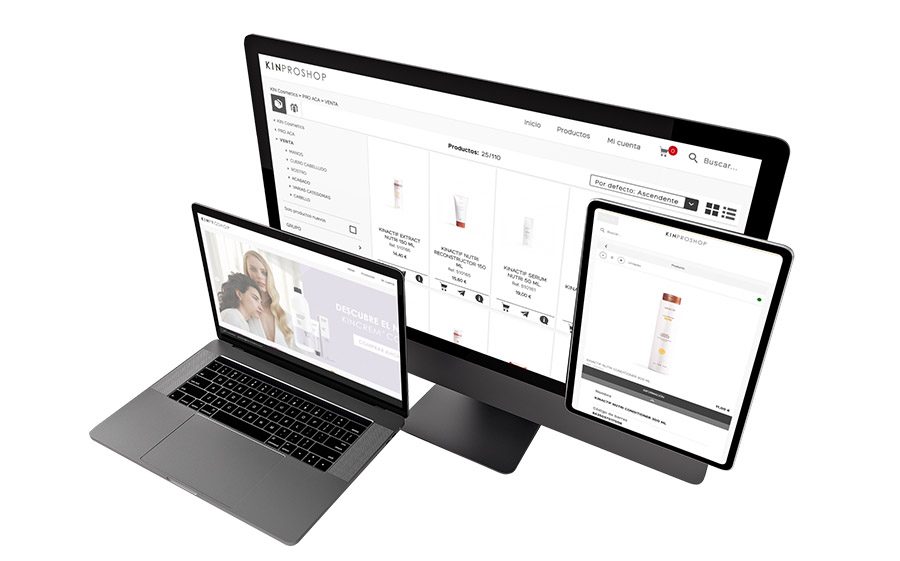
At CatalogPlayer we have created a sales software that streamlines all these processes, so that your sales team can go out and attract customers in the best possible way and also have all the resources to keep them.
These are some of the advantages of using the CatalogPlayer platform for loyalty:
- Providing them with the information and content they need at the right time, whether in person or online.
- Collecting and analysing information about each customer's sales behaviour, so you can better adapt to their needs, which may change.
- Managing the different customer touchpoints from a single place, with an omnichannel platform.
- Following up on user requests without losing information along the way.
In short, the key to having loyal customers lies in developing a strategy for it, seeking to attract them proactively and at the same time dedicating time and resources to retaining your existing portfolio. Don't wait for customers to come on their own and continue trusting your company just because you offer the right treatment. Go ahead and offer a unique and excellent experience.