













Artificial Intelligence is undoubtedly one of the great technological revolutions of recent times. The application of AI systems to commercial actions is a booming trend that is being applied in large companies in different sectors.
Within Artificial Intelligence, the machine learning stands out, a field within AI that allows machines to learn by themselves.
It is a common misconception to think that AI aims to replicate a human brain. Rather, it is about systems that are capable of going beyond the human brain; they interpret large amounts of data and solve problems by applying logical reasoning and learning from it.
In this way, the machine learning it can help companies automate decision-making quickly and reliably.
Multi-experience selling
The current situation in the world of sales can benefit greatly from Artificial Intelligence.
Currently, touchpoints and customer interactions are increasing exponentially. Sales today are multi-experience.

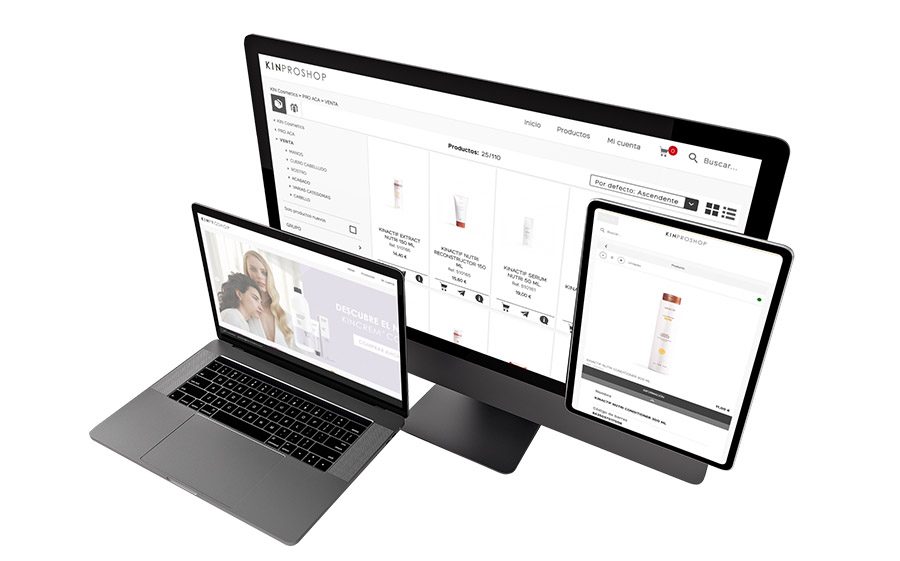
The customer comes into contact with the company through different channels at the same time: the sales visit, catalogues, social media, POS materials, different devices…
In this new context, traditional sales models become obsolete. However, most companies are not prepared for the level of hyperautomation that these interactions require.
How can we adapt to the future of sales?
These are the 3 main keys presented by Pere Tura (CEO of Catalog Player) in the talk he gave at the recent Social Selling Day 2021:
- Enhance “engage” (involve, commit) with a customer who is everywhere. To do this, sales teams must evolve towards customer-oriented systems, rather than product-oriented ones, that satisfy their purchasing needs.
- Give the sales team the knowledge and training needed to adapt to digital channels and a constantly evolving environment.
- Lastly, and no less importantly, invest in AI technology. In this changing reality, AI is our best ally, as it allows sales tasks to be hyperautomated effectively.
The future is AI, why?
As we have seen, the buyer profile has changed. They move in a large number of environments (multi-experience) and it has been calculated that they spend only around 20% of their purchasing time interacting directly with the salesperson.
In this context, both sellers and buyers have at their disposal large amounts of information, which without the right systems is scattered and often wasted by companies. Moreover, for the customer, not knowing what information is “trustworthy” can be a source of stress that harms the purchasing experience.
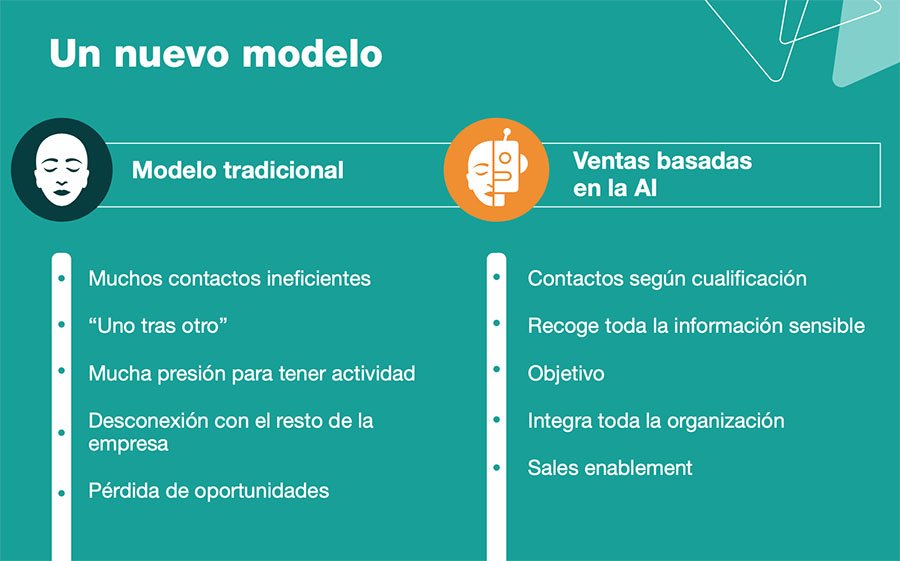
To solve this problem, it is essential to invest in Artificial Intelligence technology. While the traditional sales model has no predictability, AI allows predictive models to be designed.
By gathering information during commercial interactions and using machine learning, it is possible to predict customer behaviour and preferences to create a personalised experience, which will be better for both the seller and the buyer.
The transition to AI models
The shift towards a fully automated sales model is a long road and AI technologies have many years ahead to continue advancing.
To adapt to this new reality, it is interesting to take advantage of the information management systems that many companies already have. To do this, the best solution is to invest in Sales Enablement, especially in a platform that allows existing systems to be integrated and optimised through Artificial Intelligence.
This will allow companies to make a faster and more “rewarding” transition to AI that, although complex, will prevent them from being left behind.