














It is a common situation for the administration and finance department of a B2B company to be overburdened with work. It happens that, often, a great deal of time is invested in this department in support tasks, especially for sales, which is not devoted to higher value-added tasks.
The problem: the lack of integration leads to errors
The underlying problem is that very often the administrative-financial department receives queries and orders from sales staff and customers through multiple channels and in different formats. The lack of integration of the channels (e-commerce, CRM, Pre-sales…) means extra effort for the organisation, even more so when non-standardised channels are added, such as paper, email, WhatsApp, calls… This can become a source of potential errors.
If this happens in your company, it is very likely that your administrative-financial department is wasting a lot of time reviewing and correcting sales errors that have not been detected previously at reception. For example, incorrectly placed orders, wrong or incorrectly applied prices, incorrect customer data, stock problems…

This, on the one hand, can mean extra costs for the company (in products, logistics, credits…), and on the other, it means that administration and finance take on additional responsibility at departmental level.
Often this creates a complicated situation for the company:
- Departmental tensions arise between administration, sales and logistics
- Consequently, management ends up being involved.
Unification of channels
To resolve this solution it is essential to address the root of the organisational problem: the lack of integration.
By unifying the channels and methods of communication between administration and the sales team, the time invested by both departments can be optimised. The fluid exchange of information, not only between administration and sales, but also among the sales staff themselves, greatly reduces errors in the sales process.

In general, to free administration from unnecessary workload and responsibility, the best option is to opt for the alignment of departments. The goal should be to find a global solution, which not only helps administration and finance, but changes the way of working and communicating between the different departments.
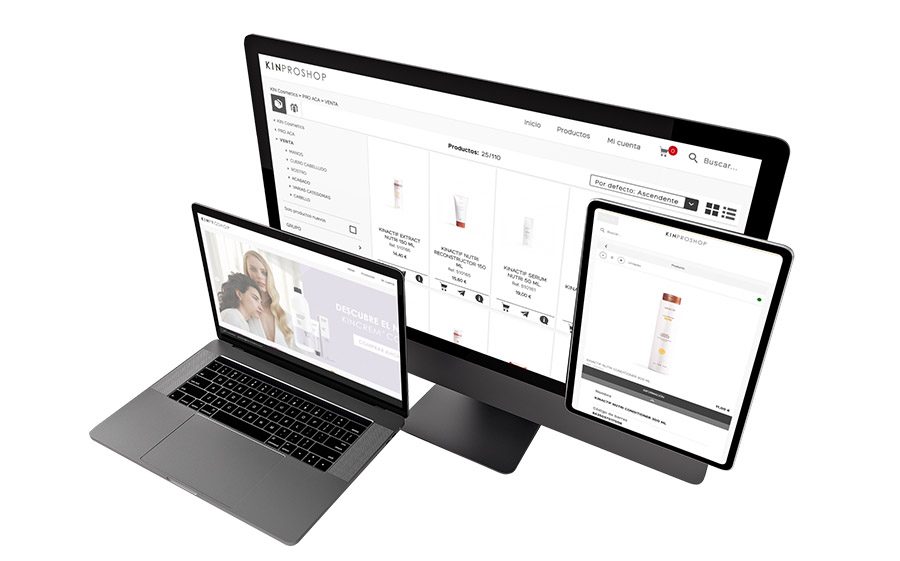
A solution such as a platform with intelligent sales software, capable of unifying communication channels and integrating with other current company tools,
Systems integration
Acquiring Sales Enablement or intelligent sales software does not have to mean giving up any previous organisational system. In fact, it is very interesting for improving business administration to acquire a platform that integrates with your ERP (Enterprise Resource Planning) .
Integrating your ERP with a Sales Enablement platform enables more effective business management. The constant flow of information is a great help for administration to carry out solutions centrally and detect opportunities for improvement.
Furthermore, being able to access rigorous and up-to-date information on products and sales actions greatly reduces the time that administration and finance wasted on receiving and managing queries and orders through different channels.
Gain in productivity and quality
The result of applying an integrated Sales Enablement solution is of significant benefit to the company in the long term. An intelligent sales platform improves the workflows of all departments, which means fewer inaccuracies and errors, less time wasted unnecessarily… and greater overall efficiency.

This, of course, means greater productivity and good quality of work in the administrative department, in parallel with a decrease in complaints and, therefore, a better working environment.
Last but not least, the automation of certain functions and the reduction of errors and complaints conveys to the customer an image of a serious, high-quality and technologically up-to-date supplier.