













Artificial Intelligence has burst forcefully into the world of sales. But it is important to be clear that AI can help a lot, but it does not work miracles.
Today it is possible to generate emails in seconds, summarise meetings automatically or analyse sales conversations with hardly any human intervention. All of this represents a great opportunity for sales teams, especially in B2B environments where time is a scarce resource. However, enthusiasm for AI sometimes means that some important limitations are overlooked.
The problem is not AI, but using it without supervision, without quality data or expecting it to replace the salesperson.
Because, although technology is advancing very quickly, it is still far from replacing the judgement, experience and knowledge that a sales professional brings. If we use it well, it is and will be an essential tool, but we have to bear in mind some warnings.
1. AI is not always right
One of the best-known problems with generative AI tools is that they can invent information or present incorrect data as if it were true.
In sales, this can translate into emails with errors, incomplete meeting summaries or messages that include outdated information about a product or a customer.

The problem is not so much that AI makes mistakes — people do too — but that it often does so with total confidence. If no one reviews the content before sending it, the risk of making mistakes increases considerably.
That is why any content generated by AI should always go through a human review before reaching the customer. And also
2. The risk of sounding like everyone else
Many companies are using AI to write prospecting emails, LinkedIn messages or sales proposals. The problem is that, when everyone uses similar tools, the messages start to look too much alike.
Buyers receive more and more communications that sound correct, but impersonal. Well-written messages, but ones that could have been sent to any company.
In B2B sales, where trust and knowledge of the customer are fundamental, this can become a problem. A good tool can help save time, but real personalisation still depends on whoever knows the account, understands the context and knows what concerns each interlocutor.
Technology can make the work easier, but it will hardly replace a well-prepared conversation.
3. When automation replaces thought
Automation is useful. No one wants to spend hours on repetitive tasks that a tool can solve in minutes. However, there is a risk of falling into excessive dependence. When AI generates emails, summarises meetings, proposes next steps and prioritises opportunities, some professionals may end up trusting its recommendations too much.
The danger is not in using these tools, but in ceasing to question them.

The best commercial decisions usually require something more than data: experience, intuition and understanding of the context. Aspects that, for now, remain difficult to replicate through algorithms.
4. Data also has biases
AI learns from the information with which it has been trained. If that data contains biases or reflects past decisions that were not the best, the tool may reproduce those same patterns.
For example, a scoring solution might always prioritise certain customer profiles because historically they have generated more revenue. At first glance it seems logical, but it could also cause the team to ignore new opportunities or emerging markets.
That is why it is important not to assume that a recommendation generated by AI is automatically correct. Behind every model there are data, criteria and decisions that should be reviewed periodically.
The key: Finding the balance
AI is already part of the day-to-day work of many sales teams and its presence will continue to grow in the coming years. The question is not whether it should be used or not, but how to do so intelligently, in which areas to do so and which tools to use at a corporate level.
The companies that obtain the best results will be those that use technology to free up time and improve productivity, without giving up critical thinking, knowledge of the customer and the ability to build relationships of trust. Because, in the end, tools can help sell better. But it is still people who close the most important opportunities.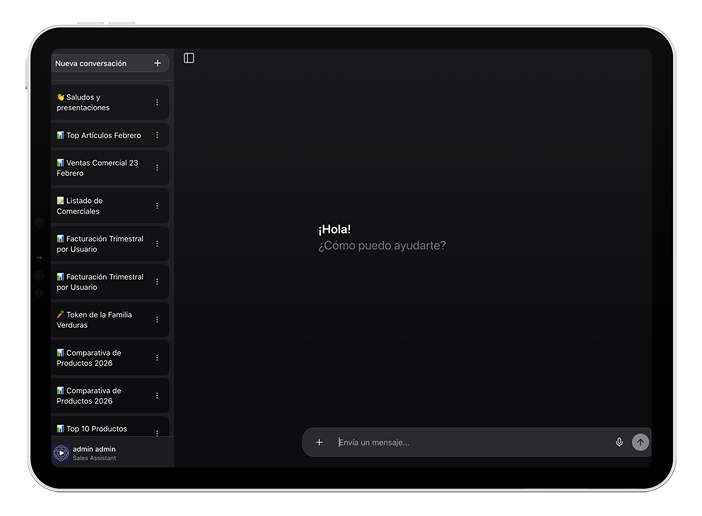 From Catalog Player we make available to you the best option to improve your sales in the B2B sector. It is now possible to use our platform with built-in Artificial Intelligence. Consult all the information at catalogplayer.com/caitium-ia-sales-assistant/